Comprender qué se considera una buena puntuación en una máquina de boxeo arcade (boxer machine) no es solo una de las preguntas más frecuentes entre los jugadores; es un conocimiento operativo esencial para administradores de Centros de Entretenimiento Familiar (FEC), propietarios de salones recreativos y distribuidores B2B que dependen de estos equipos para generar ingresos recurrentes de alto margen.
Mientras que el usuario casual percibe la máquina de boxeo como un entretenido desafío de fuerza física, los operadores comerciales la evalúan como un activo recreativo de alto retorno de inversión (ROI), donde la precisión del sistema de medición, la estabilidad en la calibración y la psicología del jugador impactan directamente en la recaudación diaria (coin-in) y la rentabilidad a largo plazo.
Esta guía explica en detalle los rangos de puntuación estándar de la industria y cómo optimizar la mecánica de juego para maximizar el compromiso del cliente y la facturación de tu local.
¿Qué es una Buena Puntuación en una Máquina de Boxeo Arcade?
Aunque la escala exacta varía ligeramente según el fabricante, la mayoría de las máquinas de boxeo comerciales calibradas para uso público siguen estos parámetros de referencia:
| Rango de Puntuación |
Nivel del Jugador |
Perspectiva del Operador e Impacto Comercial |
| 300 – 500 |
Jugadores Ocasionales / Principiantes |
Ideal para niños o usuarios novatos; incentiva la repetición inmediata para mejorar el intento. |
| 500 – 700 |
Fuerza Promedio |
Zona principal de facturación; representa al cliente estándar que suele realizar de 3 a 5 intentos consecutivos. |
| 700 – 850 |
Jugadores Fuertes |
Genera expectación alrededor de la máquina, atrae espectadores e intensifica el juego competitivo en grupo. |
| 850+ |
Golpeadores de Élite |
Umbral idóneo para configurar "puntuaciones con premio" (Reward Scores), impulsando partidas pagadas adicionales.
|
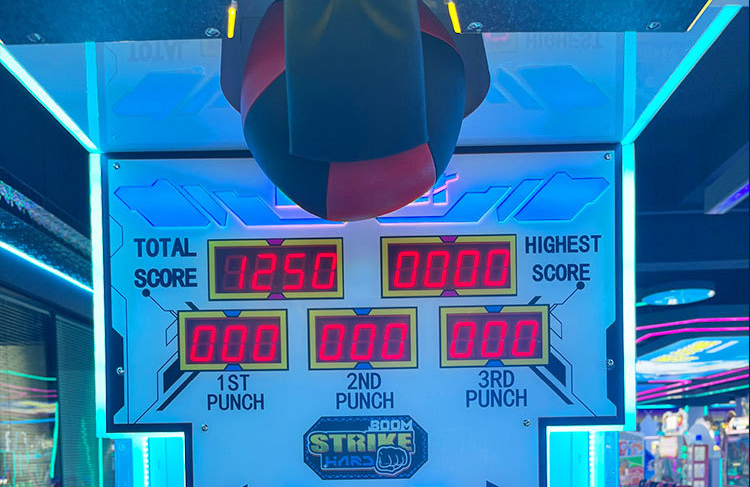
Nota de Experto: Una "buena puntuación" es más que un simple número en la pantalla LED: es una herramienta de diseño de experiencia (Game Design) que moldea la conducta del usuario, estimula la competencia social y determina la frecuencia con la que los clientes insertan fichas o pagan mediante tarjeta.
Por Qué la Mecánica de Puntuación Impacta Directamente tus Ingresos
En centros de entretenimiento comerciales, la rentabilidad sostenida de una máquina de boxeo se fundamenta en tres pilares de comportamiento del usuario:
1. Comportamiento de Alta Repetición de Juego (Competitive Replay)
Las máquinas de boxeo pertenecen a la categoría de atracciones de repetición competitiva. Es extremadamente raro que un jugador realice un solo golpe y se retire. Los usuarios juegan repetidamente para:
-
Superar su marca personal previa.
-
Vencer el récord de sus amigos en el grupo.
-
Posicionarse en la tabla de clasificación (Leaderboard).
-
Alcanzar la puntuación objetivo para obtener una partida gratis o premio.
Resultado: El usuario medio realiza entre 3 y 8 jugadas por sesión.
2. Visibilidad Social = Marketing Orgánico Gratuito
El acto de golpear el saco genera de forma natural:
-
Aglomeración de espectadores y animación en el local.
-
Grabación de videos para redes sociales (TikTok, Instagram Reels).
-
Retos grupales entre amigos o parejas.
Cada espectador rodeando la máquina es un cliente potencial convertido a bajo costo.
3. Conversión Directa de Tráfico a Volumen de Partidas (Coin-In)
Una máquina instalada estratégicamente genera de forma consistente:
-
300 – 600 partidas/día en centros comerciales de alto flujo.
-
80 – 200 partidas/día en salones recreativos estándar, bares o boleras.
-
Volúmenes superiores en parques de atracciones, ferias y mercados nocturnos.
La confianza en la precisión del golpe es clave: si el jugador siente que el marcador es justo, continuará jugando.
KPIs Comerciales Clave que Todo Operador Debe Monitorear
Para garantizar el rendimiento financiero máximo de sus equipos, los operadores de FEC experimentados supervisan las siguientes métricas de rendimiento:
-
APPC (Average Plays Per Customer - Promedio de Jugadas por Cliente):
Promedio de la industria: 2.5 jugadas/persona.
Máquinas optimizadas y bien ubicadas: 5 a 8 jugadas/persona.
-
Volumen de Recaudación Diaria (Coin-In / Cashless Volume):
Precursor directo del flujo de caja. Las máquinas de boxeo superan de forma consistente a las canastas de baloncesto arcade y mesas de aire en tasa de repetición.
-
Disponibilidad Operativa de la Máquina (Uptime 95% – 98%):
Los equipos de grado comercial deben funcionar de forma ininterrumpida durante largas jornadas sin fallos de calibración o lecturas erróneas.
-
Período de Recuperación de la Inversión (ROI Payback):
La mayoría de los operadores recuperan el costo total del equipo en 40 a 90 días (en ubicaciones prémium con gran afluencia: 20 a 40 días).
Cómo Utilizar la Mecánica de Puntuación para Incrementar la Recaudación
1. Configura una "Puntuación de Recompensa" (Ejemplo: 850+ Puntos)
Cuando los usuarios saben que superar un umbral otorga un incentivo, la tasa de conversión se dispara:
-
Una partida extra gratuita.
-
Un obsequio o tique promocional del local.
-
Descuentos en consumiciones o partidas en otros juegos.
2. Habilita y Promueve las Tablas de Clasificación (Leaderboards)
Los rankings diarios, semanales o históricos fomentan:
-
Competencia constante entre clientes habituales.
-
Publicaciones en redes sociales etiquetando al establecimiento.
-
Desafíos comunitarios que mantienen la máquina activa a lo largo del día.
3. Mantén Accesible el Rango Inferior de Puntuación
Asegurar que los principiantes y adolescentes obtengan puntuaciones gratificantes amplía el target de usuarios, evitando que la máquina se perciba como exclusiva para deportistas de alto rendimiento.
4. Evita que la Puntuación Máxima Sea Demasiado Fácil de Alcanzar
Si cualquier jugador alcanza el marcador máximo (ej. 999) sin esfuerzo, el factor de desafío desaparece. Una calibración equilibrada garantiza que los golpeadores fuertes se sientan desafiados mientras que los novatos disfrutan de un progreso alcanzable.
La Importancia de la Calibración: La Precisión Construye Confianza
La precisión en la medición del golpe está directamente ligada al retorno financiero. Una máquina mal calibrada genera:
-
Quejas de los usuarios por lecturas inconsistentes.
-
Pérdida de interés y abandono del equipo.
-
Deterioro de la reputación del salón recreativo.
Requisitos Industriales para una Máquina de Boxeo Comercial
Un equipo profesional para centros de entretenimiento debe incluir:
-
Sensores de fuerza de alta precisión (células de carga industriales).
-
Mecanismo de rebote y suspensión de alta resistencia para amortiguar impactos continuos.
-
Estabilidad en el software de puntuación sin necesidad de reajustes constantes.
-
Chasis de acero reforzado y pera de boxeo en piel de alta durabilidad.
Recurso para operadores: Si deseas mantener tus equipos en óptimas condiciones operativas, consulta nuestras guías especializadas:
Ejemplo Real de Retorno de Inversión (ROI) para Operadores
Análisis estimado basado en un centro comercial con flujo medio-alto:
-
Precio sugerido por partida: $1.00 USD
-
Promedio de partidas diarias: 200 partidas
-
Total de partidas mensuales: 6,000 partidas
-
Ingresos mensuales estimados: $6,000 USD
-
Costo de adquisición del equipo: $1,700 – $2,200 USD
-
Costo mensual de mantenimiento estimativo: < 3%
-
Tiempo de amortización del ROI: 45 a 60 días
En ubicaciones de ocio nocturno o ferias con alto tráfico peatonal, la amortización se alcanza frecuentemente entre los 20 y 40 días de operación.
Por Qué los Operadores Globales Eligen las Máquinas de Boxeo de AMA Amusement
Con más de 16 años de trayectoria en el diseño y fabricación de equipos recreativos y presencia comercial en más de 150 países, AMA Amusement suministra soluciones comerciales llave en mano para operadores que priorizan la durabilidad, el rendimiento técnico y la alta rentabilidad.
Ventajas Competitivas de Nuestras Máquinas Arcade de Boxeo:
-
Estructura de Acero de Grado Comercial: Diseñada para uso intensivo 24/7.
-
Sistema de Sensores de Fuerza de Alta Precisión: Lectura fiel, estable y libre de desviaciones.
-
Certificaciones Internacionales de Seguridad: Homologaciones CE, UL, FCC, RoHS y SGS.
-
Compatibilidad Multipago: Aceptadores de monedas/billetes, lectores QR y sistemas monedero sin efectivo (Cashless/Nayax).
-
Personalización OEM/ODM: Opciones de marquesina, vinilos personalizados, iluminación LED y software adaptado.
-
Soporte Técnico de por Vida y Precios Directos de Fábrica.
Conclusión
Una "buena puntuación" en una máquina de boxeo arcade es mucho más que una cifra numérica: es el motor psicológico que convierte a visitantes casuales en clientes recurrentes. Para los operadores B2B, la clave del éxito radica en contar con equipos calibrados, resistentes y atractivos que garanticen un flujo constante de ingresos.
Si estás planificando renovar la flota de tu salón recreativo, abrir un nuevo centro FEC o añadir un equipo de alta rentabilidad a tu negocio:


